The Necessity for Electronic Counseling on College Campuses
When we are asked to think about our health conditions, the first thing that comes to our minds is usually the physical state of our bodies. An important aspect that is often overlooked is our mental health. While mental health is not as openly addressed as the former, it is just as pertinent and applicable to each person. Parallel to how eating unhealthily and not exercising are bad for your physical health, adhering to the misconception that mental health issues are a personal matter that the individual alone can and should deal with is bad for your mental health; rather, one should reach out and talk to someone about what they are experiencing so that they can receive help. Furthermore, mental health is measured on a continuum; an individual could be experiencing mental complications, but not necessarily a mental disease. Regardless of where one is placed on the scale, their mental state has an effect on their overall health and ability to perform. The college transition and college life itself can be very demanding physically, mentally, and emotionally. While we do have our friends, advisors, and other support systems we could turn to, sometimes we need to or we just feel more comfortable if we seek help from experienced professionals who may better understand our personal scenarios. Thus, counseling is an essential component of campus life. Although face-to-face counseling is already an established practice, universities should focus on investing more resources on electronic counseling. This would lead to easier accessibility, reduction of social stigma, and potential for deeper reflection.
When it comes to counseling at the University of Michigan, Counseling and Psychological Services (CAPS) is the prime support system which students turn to. Their mission goal is “to foster the psychological development and emotional well-being of students through counseling and psychotherapy, preventive and educational programming, consultation and outreach, as well as contributions to the mental health professions” (CAPS Counseling and Psychological Services). Moreover, their Diversity Statement depicts their objective as “to affirm diversity, to condemn oppression in every form and to encourage the utilization of…[their] services by all students…” (CAPS Counseling and Psychological Services). In addition to individual counseling, CAPS offers group therapy sessions, workshops, psychiatric support, screenings, and even counseling for parents of a student who may be dealing with familial difficulties. Their web material, CAPS Stressbusters app, and social media are all resourceful, informative, and serve to support all students.
While many universities offer counseling services similar to those of CAPS, there still exists a variety of challenges in college counseling. An efficient solution would be to offer more electronic counseling resources. One of the challenges is therapists’ bias in counseling of multiracial individuals. Common stereotypes about multiracial individuals can stimulate subconscious bias against multiracial patients if the counselor generalizes them based on their identity rather than primarily treating them as an individual. It is crucial that counselors address this challenge because the ratio of multiracial students is rapidly increasing throughout schools (Harris 2). Certain forms of online counseling enable the patient to have an anonymous identity; this can reduce the risk of any identity-based stereotypes that could lead to counselor’s bias in counseling. Another concern is the increase in demand for counseling services. This increase is caused by the changing demographics of college student populations as well as a variety of social and cultural factors. It may also be an indication of a greater acceptance in treatment by students. This increase in demand, however, is not being adequately fulfilled by an increase in supply. According to a study, the “increased demand for services without a corresponding increase in resources is a major challenge and concern for 63% of campus counseling centers surveyed” (qtd. in Kitzrow 4). This concern is expressed by U of M students as well; CAPS had “reported a 17% increase in demand for counseling service in 2014-2015, more than four times its expected increase” (St. John, “Mental health speak out calls for better counseling services on campus”). While it would be ideal to have more counselors or appointment slots available to students, these are extremely costly and time-consuming. On the other hand, for online counseling, universities do not have to go through the hassle of trying to find more counselor to hire and further training them. Additionally, online counseling is a cheaper alternative to counseling.
There are many advantages to online therapy that are not found or are lacking in traditional counseling. Although electronic counseling has never been the principal method of counseling, it has been constantly modified throughout the past decades and has become more applicable and effective towards patient treatments. One of its benefits is its accessibility; as long as the patients have all of the necessary technology, they are able to receive treatment from any location. This ultimately spares time and money that would normally be spent for transportation. Additionally, social stigma around counseling could be reduced. Some methods of electronic counseling allow for anonymity; this could help students feel more comfortable, encouraging them to seek help and wholeheartedly open up to their counselor. Lastly, the time delay present in some forms of electronic counseling could enable the patient to reflect more on their emotions and how to communicate how they are feeling. For example, in a one-on-one or group chat box, both the counselor and the patients have time to thoroughly evaluate their thoughts and how to communicate them.
Recognizing these advantages, many universities throughout the U.S. have been adopting different methods of electronic counseling in response to increases in specific mental conditions. CAPS at U of M had implemented an over-the-phone mental health hotline into its program fall of 2015. This ProtoCall hotline enables students to immediately speak to a counselor whenever they need to, regardless of office hours, weekends, and holidays. CAPS had adopted this service after realizing that many students needed alternative resources for mental health crises that occurred during non-office hours. ProtoCall is used on more than 100 college campuses and has helped over 2 million students (Penrod, “CAPS adds after-hours call line for counseling”). Thus, online counseling can be beneficial for college students if the target and objective of that specific method is able to fulfill the primary demand of the students, and if it is used synchronously with face-to-face counseling. Likewise, the Counseling and Wellness Center at the University of Florida had recently developed an online psychotherapy program in response to a demand for more services. The program, called Therapist Assisted Online (TAO), is specifically for students dealing with anxiety. It is an integration of self-help and traditional therapy, and emphasizes on the relationship between the counselor. (O’Neil, “Campus Psychological Counseling for Students Goes Online”).
Undeniably, there can be several challenges imposed by counseling electronically. However, if used properly in addition to face-to-face counseling with the objective of helping a specific group of patients, student counseling will enhance maximally. Some may argue against online counseling that it is exclusionary to those with limited technological ability. Anonymity can also create challenges; counselors could potentially misrepresent themselves, or there may be scenarios in which they are obliged to report the client so that they can receive appropriate care (Harris and Birnbaum 135). Additionally, the lack of certain verbal and non-verbal cues increases the risk of misinterpretation between the client and the counselor. Depending on the medium of counseling, the messages sent between the counselor and the patient may be very limited. Furthermore, in cross-cultural scenarios, the counselor may be more “vulnerable to cultural insensitivity and unintentional discrimination…” (Harris and Birnbaum 136). For all of these reasons, in order to receive maximal benefits from electronic counseling, it should be used conjunctionally with face-to-face counseling. Moreover, video chats enable the patient to virtually experience that essential one-on-one time with their counselors. It is a good method of online counseling if patients are unable to physically see their counselors face-to-face, or if they just want to extend their face-to-face time outside of their counselor’s office. Online counseling services should also be designed specifically to help a certain group of patients. Depending on the severity of the mental complication, not all patients would benefit from the same online clinical service. Similar to how doctors specialize in specific practices, depending on the demand for certain care at a university, online counseling should be adapted to meet the needs of the students on that campus. Ultimately, face-to-face counseling is the central manner for which the student and the counselor would develop a foundational relationship—everything done online would be an enhancement to their relationship.
Considering the prevalent increase in demand for more clinical services across college campuses, more universities should fund electronic counseling. The University of Michigan has been taking the initiative these past few years to spread mental health awareness and to cultivate a supportive campus culture. Nevertheless, there still remains a large student demand for more and improved mental health resources. In an interview, a student stated that she “had difficulty making timely appointments and was told she should seek outside resources to receive long-term care for her chronic illness, which she said wasn’t a possibility due to money and transportation concerns” (Moehlman, “Regents address issues of mental health at Thursday meeting”). Universities in similar situations that initially responded to the issue by hiring more counselors found that implementing an online counseling service has been significantly more efficient—in terms of serving more students and improving their mental health. This ultimately saves a lot of time, money, and energy. Additionally, electronic services have the benefits of easy accessibility, easier outreach for students due to reduction of social stigma, and potential for deeper reflection because of delayed communication. If used properly as an extension to in-person therapy with the objective of helping students experiencing a specific mental complication, electronic therapy could help thousands of students throughout the country. Mental health is a critical component of our overall wellbeing, and directly influences our ability to perform the way we would like to. Moreover, college is a critical intermediary stage in constructing and defining one’s future. Thus, it is important that college students are able to access the proper resources necessary to take care of and foster their mental health. With an ongoing increase in demand for more adequate and alternative mental health resources, it is necessary that universities quickly respond by investing more on electronic counseling.
Works Cited
CAPS Counseling and Psychological Services. University of Michigan, 2016, https://caps.umich.edu/. Web. 20 November 2016.
Harris, Bryanne, Rachel Birnbaum. “Ethical and Legal Implications on the Use of Technology in Counselling.” Clinical Social Work Journal 43.2 (2015): 133-141. Print.
Harris, Henry L. “Multiracial Students: What School Counselors Need to Know.” ERIC Digest Sep. 2003: 2. Print.
Kitzrow, Martha A. “The Mental Health Needs of Today’s College Students: Challenges and Recommendations.” NASPA Journal 41.1 (2003): 167-181. Print.
Moehlman, Lara. “Regents address issues of mental healh at Thursday meeting.” The Michigan Daily, 18 March 2016: n. pag. Web. 20 Nov 2016.
O’Neil, Megan. “Campus Psychological Counseling for Students Goes Online.” The Chronicle of Higher Education, 13 Jan 2014: n. pag. Web. 20 November 2016.
Penrod, Katie. “CAPS adds after-hours call line for counseling.” The Michigan Daily, 5 October 2015: n. pag. Web. 20 Nov 2016.
St. John, Alexa. “Mental health speak out calls for better counseling services on campus.” The Michigan Daily, 11 April 2016: n. pag. Web. 19 Nov 2016.
Harris, Bryanne, and Birnbaum, Rachel. “Ethical and Legal Implications on the Use of Technology in Counselling.”
This article focuses on the benefits as well as the ethical and legal challenges of online counselling. Harris and Birnbaum address the need for more “empirical evidence” about the effectiveness of online counselling. They compare both the advantages and challenges of online counselling in terms of accessibility, anonymity, asynchronous communication, and legal issues. Overall, they convey that online counselling is a good alternative to, and should “be used effectively in conjunction with face-to-face therapy.” They also depict that technology is forever changing; thus, online counsellors must “be informed and educated about the inherent tensions and ethical implications that online counselling raises.”
Harris, Henry L. “Multiracial Students: What School Counselors Need to Know.”
Henry Harris focuses on addressing the common stereotypes about multiracial individuals and their inaccuracies, providing counselors several tactics for better counseling multiracial students. Harris also lists factors that influence the fostering of positive racial identity development. The overall goal is to get school counselors to realize the importance of sincerely understanding what multiracial individuals go through so that they can improve their methods for counselling multiracial students. Harris believes that there are many misconceptions about multiracial individuals, and that by not taking the time to acknowledge and fix these misconceptions, multiracial students are not receiving the counselling that they need to develop a healthy, positive social life. He states that “multiracial individuals need to feel genuinely valued, supported, and understood and school counselors can play an influential role in helping to communicate this message.”
Kadison, Richard D. “The Mental-Health Crisis: What Colleges Must Do.”
Richard Kadison focuses on the importance of promoting emotional health amongst college students. Kadison provides supporting statistical data to depict the fact that many students are experiencing mental health problems caused by environmental stresses. He states that because a “number of colleges and universities don’t feel that fostering the emotional development and well-being of their students is part of their mission,” they are unable to respond to the increasing demand for proper psychological counseling. His opinion is that mental health issues are “pervasive” on campus, and that students must be able to realize if they have any issues so that they can receive the help that they need. Furthermore, he states that “academic success goes hand-in-hand with emotional and physical well-being”; thus, it is vital to promote emotional health throughout campuses.
Kitzrow, Martha A. “The Mental Health Needs of Today’s College Students: Challenges and Recommendations.”
Martha Kitzrow focuses on the changing mental health needs of today’s college students, as well as challenges posed by an increase of college students with serious psychological problems. In addition to exploring problems related to mental health from the perspectives of students, faculty, staff, and institutions, Kitzrow offers strategies for adequately responding to the changing demands in mental health needs on campus. She uses statistical sources to illustrate the increase in psychological service demands throughout the years, and to depict the different counselling treatments that are available. She explains how “a variety of social and cultural factors…may account for some of the increase” in psychological problems amongst students, and how this can have an effect on several societal levels. Kitzrow’s goal is to get people to acknowledge the need for an increase and modification in psychological services on campus. She believes that “it is important for administrators, faculty, and staff to understand the profound impact that mental health problems can have on all aspects of campus life, and to treat mental health issues as an institutional responsibility and priority.”
Works Cited

Harris, Bryanne, Rachel Birnbaum. “Ethical and Legal Implications on the Use of Technology in Counselling.” Clinical Social Work Journal 43.2 (2015): 133-141. Web. 29 Oct. 2016.

Harris, Henry L. “Multiracial Students: What School Counselors Need to Know.” Multiracial America 2014: n. pag. Web. 29 Oct. 2016.

Kadison, Richard D. “The Mental-Health Crisis: What Colleges Must Do.” The Chronicle of Higher Education 51.16 (2004): B20. Web. 29 Oct. 2016.

Kitzrow, Martha A. “The Mental Health Needs of Today’s College Students: Challenges and Recommendations.” NASPA Journal 41.1 (2003): 167-181. Web. 29 Oct. 20
Dr. Sevig talks about the CAPS community and shares his perceptions on mental health.
Mental health is a prevalent issue that affects everyone. The University of Michigan has recently been taking the initiative to spread awareness on the subject. One of the key mental health resources that are available to students is the Counselling and Psychological Services center (CAPS). Dr. Todd D. Sevig is one of the licensed psychologists at and the director of CAPS. In between attending interstate conferences to gain insight and hosting workshops on campus, Dr. Sevig has dedicated his time to sit down and share information about both CAPS and his personal work.
THE CAPS COMMUNITY
CAPS’s work revolves around clinical service delivery, prevention and education, mental health wellness, research and data work, and professional training. Could you describe each component?
Those are known as the hallmarks of our profession. The counselling center is an integration of its traditional mental health agency work and its environment of student affairs. CAPS is defined by clinical, training, and outrage. Clinical refers to therapies. We train and supervise many interns, post-docs, and practicum students. Outrage consists of the community engagement, prevention, education, and support that we give to faculty so that they can do their job of supporting students.
“Everyone could use a little bit of help; everyone could use a little bit of support. We are not going to stigmatize, but rather respond in positive, non-shaping ways.”
What is/are the main goal(s) of CAPS?
It all boils down to the CAPS mission: to support mental health for all students. We wake up each morning thinking about the whole student body. Our web material, app, and social media are for all students. This ties back to our concept of outrage, in which we help the climate and culture to reduce stigma. This is done by supporting all students and their mental health challenges no matter where they fall on the mental health continuum. Everyone could use a little bit of help; everyone could use a little bit of support. As counsellors, we are not going to stigmatize, but rather respond in positive, non-shaping ways.
The CAPS website strongly conveyed the value of diversity, as depicted by the Diversity Statement. Why diversity, and how is this principle rendered through CAPS?
The first thing to consider is: who is our student body? It’s important to pay attention to social identity group characteristics and have staff that are reflective of that student body. The reality is, for some students from some social identity groups, the only way they’re going to cross the threshold and come to CAPS is if they see someone like them. The second thing is, we are framed as a multicultural organization, and thru that we have multicultural organization development. This is helping the organization live into values of social justice, practicing working in a multicultural way, and responding. To do this, we need a multicultural staff. Additionally, this helps provide training to the next generation of practitioners to have a diverse staff. Another aspect is discipline. We need psychologists, social workers, and psychiatrists on staff that provide a lot of new learning and principles for the staff.
Could you explain how the CAPS Embedded Model works and talk about the CAPS Embedded staff?
The CAPS Embedded Model is a new way of providing service, and its value stands out as: one, easier for students to get services, and two, the CAPS staff members in time get to know the unique culture of the particular place and understand what the student and staff need help with. This is our third year using the Embedded Model, and everyone loves it; it is a way to grow in a new way. The model is determined by geography and schools that are considered professional. The embedded counselor immerses themselves in that culture: they meet with the assistant dean, attend staff meetings with the school, and talk to faculty.
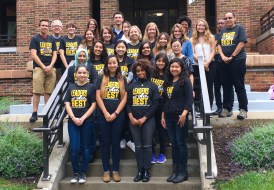
Two ways that students can get intimately involved with CAPS is through the CAPS Student Advisory Board (above) and CAPS In Action (below). (Image source: https://caps.umich.edu/)
DR. SEVIG’S PERSONAL WORK
How did you become involved with CAPS?
During graduate school, I wanted to become a faculty member. The more I got exposed to the counselling center, the more I fell in love with the profession; I loved being in an academic environment and I liked the people that I observed. I was intrigued by the notion of college student development. I did practicums in other places but I didn’t like it as much as the work I was doing in the counselling center. Initially, I started off as a temporary counsellor; I then became a clinical director and realized that I liked administration—the ability to help create an environment in which work could happen. I became an intern-director, then ultimately the director.
What are your responsibilities as the CAPS director?
The most important role I play is campus lead and setting the course for what we do and don’t do. I consider what’s most important for the students. The second component that comes with this is being a traditional manager-type director of office, in which I set policies, help associate directors, and think about the budget. And then in addition to that I do direct service, so I offer therapy for students and seminars for interns and post-docs.
“Psychotherapy is an art and a science.”
The website stated that you “approach therapy from a developmental and humanistic approach, with cognitive-behavioral approaches when needed,” and that you have been exploring western and non-western approaches to therapy. Could you elaborate on this?
All of us therapists learn how to do what’s called collective therapy, where you take historic traditions of therapy and combine it with what’s best with the presenting issue and the client. Until my generation, therapists only specialized in one type of therapy. Psychotherapy is an art and a science. The relationship between the patient and the client is really important, in addition to symptom relief and techniques. The second main thing is the multicultural approach to therapy. That’s when you get into the notion of integrating western and eastern approaches, and taking concepts from different approaches and using them. And so, the issue of power and privilege: Am I aware of my visible identities and how that impacts young students? Am I aware that something is an issue, and am I able to navigate and talk about them with the student?
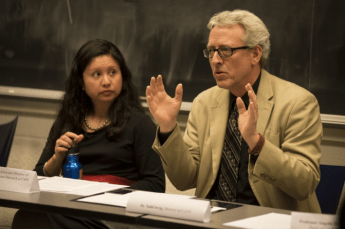
Dr. Sevig talks about mental health on Mental Health Day. (Image source: https://caps.umich.edu/)
“There was an absence in discussion, and this created a negative connotation on mental health.”
A couple Mondays ago, the campus held its first Mental Health Day, in which a panel discussion was held amongst CAPS and the LSA Student Government. Could you briefly describe the events of and your thoughts on that day?
It was the first time that CAPS was really promoted by the LSA government panel. Even if people didn’t come to the event, hopefully they saw posters. No one event is going to change the world; it’s culmination of things over time and seeing repeated messages that creates culture change. I see it as a step in progression; mental health used to be something that wasn’t really talked about on campus. There was an absence in discussion, and this created a negative connotation on mental health.
What is the importance of mental health to you?
It’s natural, normal, and a part of the human experience. Mental health is on a continuum—all of us have “mental health issues.” The question is when do you need to actually do something about it, seek professional help, pay attention, and do stuff on your own? Mental health boils down to two things: does it interfere with my happiness, and can I do what I’m able to do, or is something getting in the way? Everyone has bad days—how do I bounce back? It’s normal—you just have to do something different from people who don’t have it. There is a concept of balance—it is a real marker for mental health, so I strive for it. Don’t always reach it, but a lot of times I do.






 College Counseling and Psychological Services