

EXPLORING MENTAL HEALTH WITH DR. SEVIG
The importance of diversity

Mental health is a prevalent issue that affects everyone. The University of Michigan has recently been taking the initiative to spread awareness on the subject. One of the key mental health resources that are available to students is the Counselling and Psychological Services center (CAPS). Dr. Todd D. Sevig is one of the licensed psychologists at and the director of CAPS. In between attending interstate conferences to gain insight and hosting workshops on campus, Dr. Sevig has dedicated his time to sit down and share information about both CAPS and his personal work.
THE CAPS COMMUNITY
CAPS’s work revolves around clinical service delivery, prevention and education, mental health wellness, research and data work, and professional training. Could you describe each component?
Those are known as the hallmarks of our profession. The counselling center is an integration of its traditional mental health agency work and its environment of student affairs. CAPS is defined by clinical, training, and outrage. Clinical refers to therapies. We train and supervise many interns, post-docs, and practicum students. Outrage consists of the community engagement, prevention, education, and support that we give to faculty so that they can do their job of supporting students.

“Everyone could use a little bit of help; everyone could use a little bit of support. We are not going to stigmatize, but rather respond in positive, non-shaping ways.”
What is/are the main goal(s) of CAPS?
It all boils down to the CAPS mission: to support mental health for all students. We wake up each morning thinking about the whole student body. Our web material, app, and social media are for all students. This ties back to our concept of outrage, in which we help the climate and culture to reduce stigma. This is done by supporting all students and their mental health challenges no matter where they fall on the mental health continuum. Everyone could use a little bit of help; everyone could use a little bit of support. As counsellors, we are not going to stigmatize, but rather respond in positive, non-shaping ways.
The CAPS website strongly conveyed the value of diversity, as depicted by the Diversity Statement. Why diversity, and how is this principle rendered through CAPS?
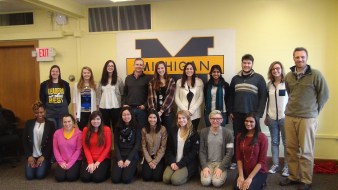
The first thing to consider is: who is our student body? It’s important to pay attention to social identity group characteristics and have staff that are reflective of that student body. The reality is, for some students from some social identity groups, the only way they’re going to cross the threshold and come to CAPS is if they see someone like them. The second thing is, we are framed as a multicultural organization, and thru that we have multicultural organization development. This is helping the organization live into values of social justice, practicing working in a multicultural way, and responding. To do this, we need a multicultural staff. Additionally, this helps provide training to the next generation of practitioners to have a diverse staff. Another aspect is discipline. We need psychologists, social workers, and psychiatrists on staff that provide a lot of new learning and principles for the staff.
Could you explain how the CAPS Embedded Model works and talk about the CAPS Embedded staff?
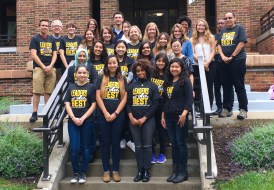
The CAPS Embedded Model is a new way of providing service, and its value stands out as: one, easier for students to get services, and two, the CAPS staff members in time get to know the unique culture of the particular place and understand what the student and staff need help with. This is our third year using the Embedded Model, and everyone loves it; it is a way to grow in a new way. The model is determined by geography and schools that are considered professional. The embedded counselor immerses themselves in that culture: they meet with the assistant dean, attend staff meetings with the school, and talk to faculty.
DR. SEVIG’S PERSONAL WORK
How did you become involved with CAPS?
During graduate school, I wanted to become a faculty member. The more I got exposed to the counselling center, the more I fell in love with the profession; I loved being in an academic environment and I liked the people that I observed. I was intrigued by the notion of college student development. I did practicums in other places but I didn’t like it as much as the work I was doing in the counselling center. Initially, I started off as a temporary counsellor; I then became a clinical director and realized that I liked administration—the ability to help create an environment in which work could happen. I became an intern-director, then ultimately the director.
What are your responsibilities as the CAPS director?
The most important role I play is campus lead and setting the course for what we do and don’t do. I consider what’s most important for the students. The second component that comes with this is being a traditional manager-type director of office, in which I set policies, help associate directors, and think about the budget. And then in addition to that I do direct service, so I offer therapy for students and seminars for interns and post-docs.
“Psychotherapy is an art and a science.”
The website stated that you “approach therapy from a developmental and humanistic approach, with cognitive-behavioral approaches when needed,” and that you have been exploring western and non-western approaches to therapy. Could you elaborate on this?
All of us therapists learn how to do what’s called collective therapy, where you take historic traditions of therapy and combine it with what’s best with the presenting issue and the client. Until my generation, therapists only specialized in one type of therapy. Psychotherapy is an art and a science. The relationship between the patient and the client is really important, in addition to symptom relief and techniques. The second main thing is the multicultural approach to therapy. That’s when you get into the notion of integrating western and eastern approaches, and taking concepts from different approaches and using them. And so, the issue of power and privilege: Am I aware of my visible identities and how that impacts young students? Am I aware that something is an issue, and am I able to navigate and talk about them with the student?
“There was an absence in discussion, and this created a negative connotation on mental health.”
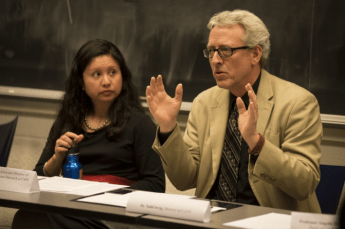
A couple Mondays ago, the campus held its first Mental Health Day, in which a panel discussion was held amongst CAPS and the LSA Student Government. Could you briefly describe the events of and your thoughts on that day?
It was the first time that CAPS was really promoted by the LSA government panel. Even if people didn’t come to the event, hopefully they saw posters. No one event is going to change the world; it’s culmination of things over time and seeing repeated messages that creates culture change. I see it as a step in progression; mental health used to be something that wasn’t really talked about on campus. There was an absence in discussion, and this created a negative connotation on mental health.
What is the importance of mental health to you?
It’s natural, normal, and a part of the human experience. Mental health is on a continuum—all of us have “mental health issues.” The question is when do you need to actually do something about it, seek professional help, pay attention, and do stuff on your own? Mental health boils down to two things: does it interfere with my happiness, and can I do what I’m able to do, or is something getting in the way? Everyone has bad days—how do I bounce back? It’s normal—you just have to do something different from people who don’t have it. There is a concept of balance—it is a real marker for mental health, so I strive for it. Don’t always reach it, but a lot of times I do.
 College Counseling and Psychological Services